137 drills match your filters

Shooting
Drag Screen Team
Video by BreakthroughBBall
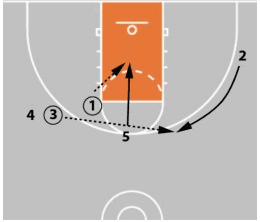
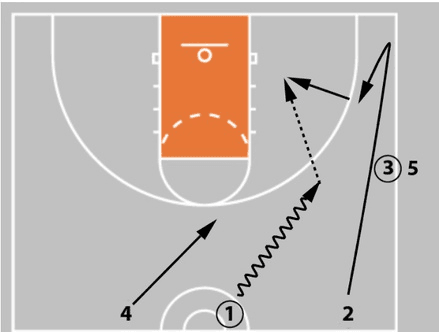
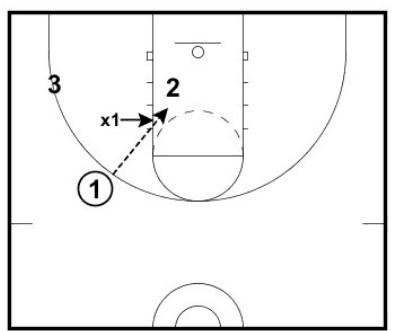
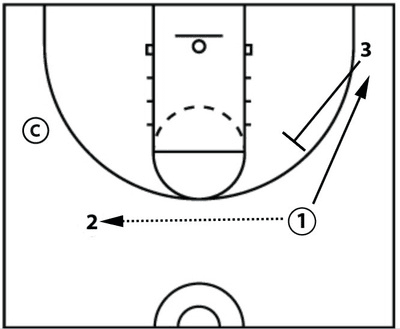
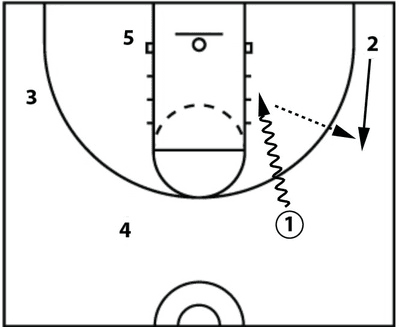
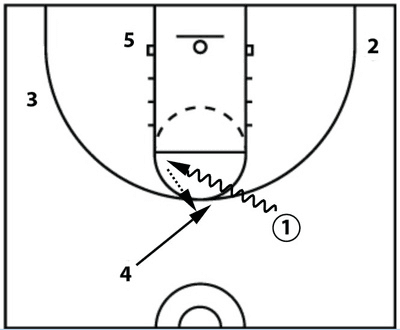
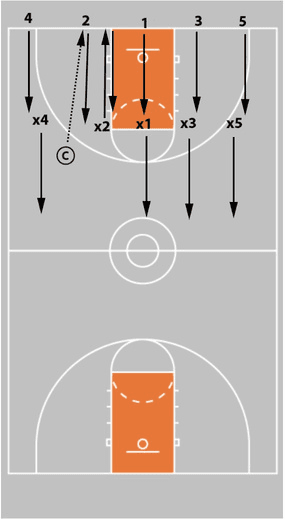
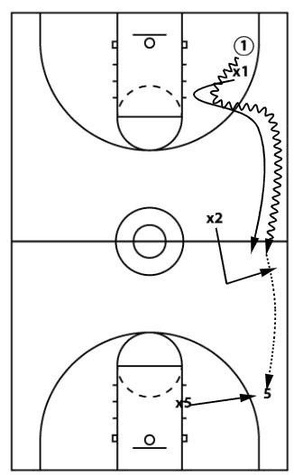
Shooting We start with a point guard, strong side wing, and big in the four spot. The passing line stands out on the weak side wing spot. We will simulate using four out one in spacing. These drills are samples of what can be done and how to build the drill for your offense. 1. Player 2 sprints to the corner. 2. Player 5 sets a drag screen for Player 1. 3. A drag screen is set by the player trailing the action in transition. 4. Player 1 dribbles off the screen toward the basket. (Diagram 1) (Diagram 2) 5. Player 5 rim runs. 6. Player 1 passes to Player 5 for a layup. 7. Player 2 drifts up and receives a pass from Player 3 for the lift. 1. The point guard has to make a decision based on the defense. 2. If Player 5’s defender switches, then Player 5 should be available on the rim run. 3. If the wing’s defender helps on the post rolling, the point guard can use a hook pass to the wing lifting. 4. The 2nd passer, Player 3, is simulating a point guard making the hook pass. 5. Place every player in every position, so all players learn all the positions for development. 6. All of the shots should be done on the move. No shot is stationary. Everything is live and game-like. Made by Breakthrough Basketball
Conditioning
2v1 Tip From Behind
Video by BreakthroughBBall
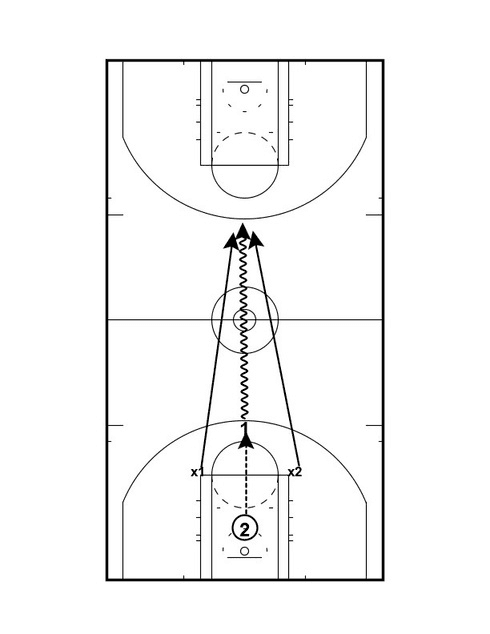
This is a great drill to practice getting back in the play after getting beat. It also builds the offensive skills of speed dribbling and finishing under control while going full speed. 2 defenders start on the elbow. One offensive player is under the rim with a ball and the other is at the top of the key. The drill begins when 2 passes to 1 (2 is then out of the drill). 1 receives the pass and speed dribbles toward the other basket to score. X1 & X2 sprint on the pass and chase 1. Their goal is to tip the ball away from behind before 1 can score a layup. To minimize fouls, only the defender on the ball side should be attempting to tip. (Diagram 1) Tip: Only the player on the ball side should attempt to tip the ball. The player on the other side should sprint alongside the ball handler and be ready to tip if the ball comes back to that side. Made by Breakthrough Basketball
Conditioning
Trap To A Tip
Video by BreakthroughBBall
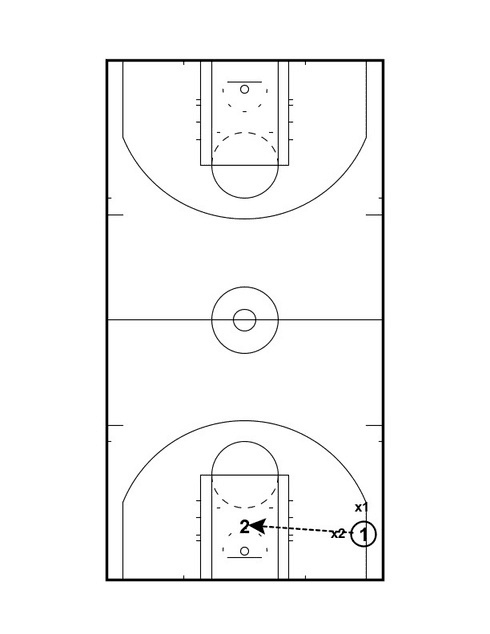
Agreat drill to work on multiple traps and a sprint mentality. Player 1 starts with the ball. Player 2 is under the rim. Defenders X1 & X2 are trapping player 1. The drill begins when 1 passes the ball to 2. (X1 & X2 are not allowed to touch that pass.) 1 is out of the drill after making the pass. As soon as 2 receives the pass, they dribble hard up the opposite side, trying to score. (Diagram 1) (Diagram 2) X1 & X2 sprint out of the trap at good angles to cut off 2 down the floor. If X1 and X2 are able to catch 2, they will look to trap along the sideline. If player 2 attempts to cross over and split the defenders, they will then chase from behind just as in the 2v1 tip from behind drill. X1 & X2 will look to tip the ball away before 2 can score. (Diagram 3) (Diagram 4) Tip: This drill is great for helping players learn to take good angles when getting the ball cut off. If not, they’ll end up behind the dribbler. Made by Breakthrough Basketball
Ball Handling
Tip From Behind
Video by BreakthroughBBall
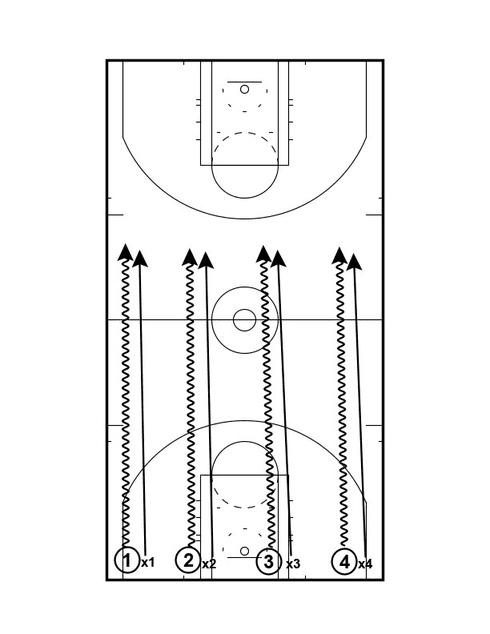
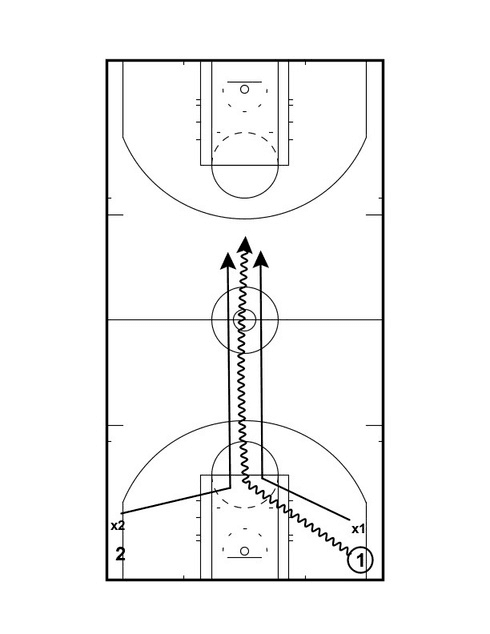
This drill is a great drill to use no matter what defense you run. Whether you press or not, players will find themselves trailing the ball and many times have the opportunity to tip from behind and create something positive from a negative situation….. if you practice this. Players partner up on the baseline The offensive player has a basketball. The defensive player lines up next to them on the dribbling hand side (in this diagram, all players would be dribbling with the right hand). The offensive player speed dribbles to the other end. The defensive player is trying to tap the ball away. If the offensive player changes hands, they must wait until the ball comes back or run behind to the other side. Never tip across the offensive player’s body. Defenders should tip the ball up softly with their inside hand. (Diagram 1) Tip: The defensive player MUST tip the ball with the hand that is next to the ball handler. So in the diagram above, each player would tip the ball with their left hand when the ball handler is dribbling with their right hand. This doesn’t always feel natural to players and takes practice. Made by Breakthrough Basketball
Reaction
Split & Tip
Video by BreakthroughBBall
While you don’t want to get split in the press, it will happen. This is a great drill to work on the next right action when that happens. Offense and defense start in the corners. Player 1 has the ball. Player 1 starts the drill by dribbling hard towards the middle, splitting X1 & X2. (This is not what you want to happen, but it will happen.) X1 & X2 must sprint and chase down 1 from behind. Their goal is to tip the ball away from behind before 1 can score a layup. Only the player on the ball side should tip. Reaching across the ball handler’s body generally results in a foul. Defender’s should attempt to softly tip the ball up with the inside hand. (Diagram 1) Tip: Always tip up on the ball. Tipping down is generally called a foul. Tipping up almost never is. Made by Breakthrough Basketball
Passing · Shooting
DHO Reject Team
Video by BreakthroughBBall
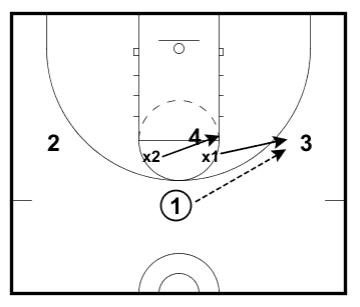
Shooting We want our players to understand they can reject a dribble handoff at any time. Just like you can reject a ball screen, you can reject a dribble handoff. 1. Sometimes the defender knows the dribble handoff is coming. 2. If the defender is overplaying the dribble handoff, Player 1 or Player 2 signals a backdoor cut. 3. Before receiving the dribble handoff, Player two performs a backdoor cut and receives the pass from Player one for a potential layup. 1. The wing, Player 2, does not have to even run up for the dribble handoff. A backdoor cut can immediately be used with a jab step. 2. Don’t make the dribbler guess what you’re going to do- develop a signal for accepting or rejecting the DHO (dribble handoff). 3. It can be as simple as putting up an open hand. It just needs to be visible to the ball handler. (Diagram 1) 4. The signal for rejecting it could be a closed fist. 4. While Player 2 is attacking the basket, Player 4 sets a screen for Player 1. 5. Player 1 flares off the screen and receives a pass from Player 3. Player 1 shoots a 3-point shot. 1. The point guard should flare off the screen ready to catch and shoot. 2. Make sure everyone is on the same page with terminology to avoid confusion. 3. Do you use flare or fade? Whatever you use, use the same terms consistently. (Diagram 2) Don’t interchange to avoid confusion. 4. For us, a screen with the shooter going to the corner is a fade. 5. For us, a screen with the shooter going to the top is a flare. 6. Timing is critical for this action to work. If the point guard gets too far, the angle of the pass becomes harder. The back door pass should come from the point guard at the perimeter of the 3-point line. Made by Breakthrough Basketball
Reaction
Guard Overload
Video by BreakthroughBBall
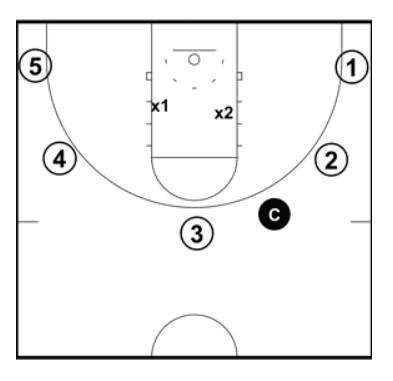
The guards in a 2-3 must be relentless. They are essentially responsible for guarding 3 or 4 offensive players, with a little help from the backline. Thus, they must be confident in their rotations and move on the flight of the pass. This drills builds those habits. The offensive team has 4 players on the court. They are positioned at the point, on the wings, and at the high post. X1 and x2 are positioned at the guard positions in the 2-3 zone. Player 1 has a ball. (Diagram 1) (Diagram 2) The offensive players pass the ball among themselves. Offensive players cannot move, dribble or shoot. The defender’s rotate, being sure to deter the high post pass at all times. Stress moving on the flight of the pass. Defenders must be in a stance at all times. Defenders should read the eyes and shoulders of the passer. Remind defenders to play with their hands up to make passes harder. Made by Breakthrough Basketball
Rebounding
Rebound By Numbers
Video by BreakthroughBBall
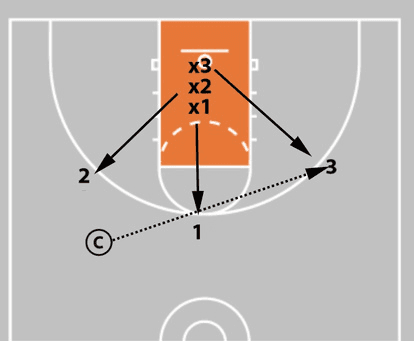
Rebounding out of the zone is a common concern. To do so effectively, defenders must identify their box out as soon as the shot goes up. This drill helps work on that skill. The drill starts with 5 offensive players and 2 defensive players. The defensive players are positioned in the paint. Offensive players are positioned beyond the 3 point line and are number 1-5. The coach starts with the ball. (Diagram 1) The drill starts with the coach shooting the ball. As they shoot, the coach will call out two numbers. (Diagram 2) The two players whose numbers are called go to rebound (4 & 1 in this diagram). X1 & x2 must find and box out those players. Play through the rebound. If you have fewer players, you can make the adjust the drill. In this diagram, you see it done with 3 offensive players & 1 defender. Stress communication. The defenders must talk to make sure they aren’t boxing out the same player. You can play the drill through the rebound or play it live until someone scores. (Diagram 3) To make the drill harder, allow the offense to move before the coach shoots. Made by Breakthrough Basketball
Reaction
Deflection Drill
Video by BreakthroughBBall
Active hands are a must in the zone. Defenders should try to read the eyes and shoulders of whoever has the ball. By doing so, they put themselves in position to deflect passes and create turnovers. This drill builds those habits 3 offensive players form a triangle. 1 defensive player starts in the middle of the triangle Player 1 has a ball (Diagram 1) Offensive players pass among themselves. The offensive players are not allowed to move or dribble (Diagram 2) X1 attempts to deflect as many passes as possible. You can run the drill for a predetermined period of time (:45) or you can have the defender switch out when they get a deflection. In that case, the player who threw the deflected pass would become the new defender. The defender should read the eyes and shoulders of the passer to predict where the pass will go. Make this a passing drill too. Encourage your offensive players to use pass fakes and take pride in not getting passes deflected. You can build this drill up and make it 4v2, 4v3, 5v3 or 5v4. Made by Breakthrough Basketball
Footwork
Flare Cuts
Video by BreakthroughBBall
1 starts the drill by passing to 2 then receiving a flare screen from 3 3 slips the flare screen to receive a pass from coach on the left wing 1 flares out to the corner to receive a pass from 2 for the shot 1 moves to the end of 3’s line 2 moves to the end of 1’s line (Diagram 1) (Diagram 2) 3 passes to coach then moves to the end of 2’s line Made by Breakthrough Basketball
Passing
The Kick Up
Video by BreakthroughBBall
The goal is to get all the way to the basket with intent to score and/or be fouled Start with a sprint step - not a slide - to create more space faster, forcing the defense to respond Kick-ups should force the defender to go through the passer to closeout 1 attacks the basket 2 moves from the corner to the free-throw line extended for an open shot (Diagram 1) 1 should make a “positive pass” by waiting to pass the ball until 2 moves behind 1 Made by Breakthrough Basketball
Passing
The Kick Back
Video by BreakthroughBBall
Kick back differs from the kick-up based on angle of attack Ball side wing finds a window for a pass option for the driver Off guard fills behind at least 6-8 feet away from the initial attacker Do NOT do a negative kick-back, defined as a kick-back on the same side as the help defender, making the closeout shorter To be effective, kick-backs should force the defender to go through the passer to closeout on the ball Players who cut through the lane should fill an open area (e. g. the left corner) 1 attacks the basket 4 heads downhill towards the ball and receives a pass from 1 (Diagram 1) 1 should make a “positive pass” by waiting to pass the ball until 4 moves behind 1 Made by Breakthrough Basketball
Conditioning
Get Back Drill
Video by BreakthroughBBall
This is a very popular drill that many coaches use across the country. We use this dill to make sure we keep the ball in the outer thirds. We used this primarily in our “Rambo” situation. That is when we pick up the ball full court. The first way to do this is by filling the hole defensively on a pitch ahead. We then build up our wall and load up defensively which builds our help side. Offensive players are along the baseline. The defense is lined up against them. Coach initiates the drill by passing to any offensive player. (Diagram 1) The defender who is guarding the player that receives the pass must sprint and touch the baseline before playing defense. In this situation, the coach calls out, “Rambo”. Offensive players are along the baseline. The defense is lined up against them. Coach initiates by passing to any offensive player. The coach calls out a player who will be the “Rambo”. In this case, the coach calls out Defender 3. Immediately, Defender 3 responds and runs to defend Player 2 who received the pass from the coach. Defender 3 works to keep Player 2 to the outer thirds. The defender who was guarding the player that receives the pass still must sprint and touch the baseline before playing defense. 1. A defender must clearly declare the hole in this drill. 2. Players must communicate through ball screen coverages. They cannot assume. They must communicate. 3. It is so important to keep emphasizing the non-negotiables throughout this drill and every every drill. Do not be afraid to stop the drill for teachable moments. (Diagram 2) 4. Coaches must stay consistent in their language, terminology, and expectations during breakdown drills. 5. The focus for the drill is on defense and the non-negotiables, so the offense should be challenging the defense in those areas. 6. The more ball reversals there are, the more challenging it is for the defense. 7. After going down and back on the drill, switch up the defense and offense. 8. We usually run this drill twice a week. We challenge our players defensively by having two defenders touch the baseline before sprinting back on defense. Made by Breakthrough Basketball
Reaction
3v2 Sideline Trap
Video by BreakthroughBBall
3v2 sideline trap is a great progression from 1v2 trapping. This incorporates all 3 levels of the press. It also lets players see how to trap in multiple areas of the floor and the rotations that ensue. As in the previous drill, x1 attempts to funnel 1 up the sideline. X2 “dances” at half court. x5 shades to the ball side and positions themself on the ballside lane line. 5 is on the ballside wing in the forecourt. As the ball comes towards half court, x1 & x2 will look to trap. (Diagram 1) Here, 1 passes ahead to 5. X5 can attempt to steal the pass. If 5 catches the pass, x5 will stay and apply pressure. X2 will turn and sprint into a “2nd trap” with x5. X1 will drop towards the wing area to be ready to intercept a reversal pass. X5 & x2 trap (Diagram 2) (Diagram 3) X1 denies a reversal Tip: If x5 is going to try to steal the pass from 1 to 5, they must be sure they’ll get it. Otherwise, they pressure and trap with x2, while not allowing 5 to drive the baseline. Made by Breakthrough Basketball
Rebounding
Creighton Rebounding
Video by BreakthroughBBall
Rebounding drills are often under utilized and help create player toughness. Rebounding is a major factor in winning and losing games. This small-sided game can easily be made more challenging with versions 2 & 3. Begin with 3 offensive players positioned around the perimeter and 3 defenders in the paint. The coach has a ball to begin Coach begins by passing the ball to an offensive player. All of the defenders close out. The player who receives the pass shoots immediately. (Diagram 1) The defenders must box out and grab the rebound. To level up the defense, the three players must circle the wagon in the paint before the coach makes the initial pass. This forces a scramble situation which causes them to communicate more. To mimic a zone defense, start with the defenders in a triangle. When the coach passes the ball in, the players must identify a player to box out. They cannot, however, choose the player right in front of them. When boxing out you should hit, locate, and get the rebound. If the offensive player gets past you, sumo out. (Sumo out means getting your backside on their thigh and drive them out of the paint.) (Diagram 2) (Diagram 3) The team that scores gets to stay on the court. This forces the offense to crash the boards rather than watching their shot. If the defenders get the rebound, they look to score immediately. They may have to finish during contact. If the defenders score, they go on offense. The defense must communicate in the more advanced versions of the drill. First contact must happen outside the key (“escape that paint”). Scream praise, whisper criticism. Made by Breakthrough Basketball
Reaction
4v4 Box Sideline Drill
Video by BreakthroughBBall
This drill works on the desired outcome of the press - a sideline trap. Players get used to their rotations and read. 4 offensive players line up in a box formation. 4 defenders matchup with a 5th defender back at the rim. The 5th defender is there to steal any deep passes. The drill begins with 1 attacking up the sideline. This should cue a trap. X1 will turn and sprint at an angle that allows them to cut off 1. X2 will sprint after 1 in an attempt to close the trap. (Diagram 1) (Diagram 2) X3, X4, and X5 move with the ball. After the initial sideline attack, play is live. The defense will look to create a turnover out of the trap. If 1 is able to pass out of the trap, the defense should look for other opportunities to jump and trap throughout the possession. (Diagram 3) Tip: Make sure your defenders guarding players on the weak side of the floor get to the midline. They can always work back to the weak side on a skip. However, you can't give up a pass to the middle of the floor. Don’t let your players “hug” their man. Made by Breakthrough Basketball
Passing
Handoff & Help Drill
Video by BreakthroughBBall
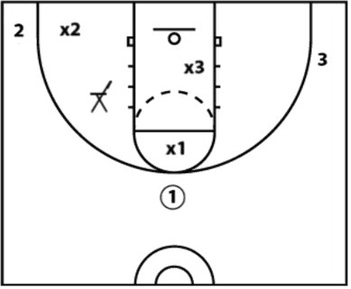
The zoom action occurs on one side of the floor but it is important to work on both sides of the action for players to read. This drill works on players getting downhill and into the paint and the decisions and reads that will occur in games. Player 1 starts at the top of the key with a basketball and a defender Player 2 starts in the corner with a defender Player 3 starts in the opposite corner with a defender A chair is put in between player 1 and player 2 (where the screen in the zoom would occur) (Diagram 1) (Diagram 2) The drill begins with player 1 dribble at the chair (screener) and player 2 coming off for a dribble handoff Once player 2 gets the basketball then the drill is live 3 on 3. This time the entire floor is in play. Where the help defender (x3) is at and what is the best play to make The opposite spot up player (3) staying low and having hands/feet ready for a kick out opportunity. Player 2 reading the action and positioning themselves for a scoring opportunity. Start the Drill Going Both Ways: Player 1 could also choose which direction they want to make the handoff. The other player would then become the spot up player. This makes it more of a live action right off the start without any predetermined actions to begin the drill. 4 on 4: This drill can also be done in the 4 on 4 setting. One variation would be to have the full zoom action with three players on one side and a spot up player on the opposite side. It also can be done with two spot up players on one side of the floor and two players and a chair for the zoom action on the other. Make the Help Defender Make a Decision: Getting downhill and into the paint is a key to success in any action, especially the zoom action. Remind players that the goal is to have the defender be in a position to have to make a decision. In this drill that will be caused by the player receiving the dribble handoff getting into the paint. Attacking Closeouts: This is a great drill to talk about how players should attack closeouts. If the help defender is closing out hard to the kickout player then attacking the shoulder of the defender is a great read. If the player is late to close out then the player must be ready to catch and shoot off of the kick out. Made by Breakthrough Basketball
Team Play
2 on 2 Ball Screens
Video by BreakthroughBBall
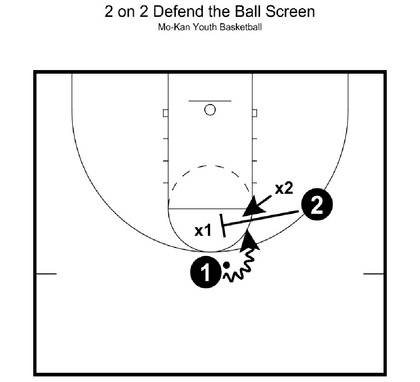
When it comes to the on ball defender and the defender guarding the screener, this is one of the best ball screen drills that you can use. Why? The defenders don’t have any help defense! This makes it way more challenging than during the game. If they can adapt and have success in this situation, your team defense will be that much stronger. There are two offensive players and two defensive players. You are playing 2 on 2. If desired, you can also play 3 on 3. In this diagram, the player with the ball starts at the top of the key. However, you can start from the wing as well. (Diagram 1) The first action at the start of every possession is a ball screen. In this scenario, 2 sets a ball screen. Defender X2 is calling out the screen and jumping to the high side to “hedge” the ball handler east-west. Defender X1 is trying to fight over the top of the screen, and only going underneath if they are caught up in the screen. Next progression is “dribble handoff”. You “switch” on all dribble handoffs as they are normally a guard to guard play. 1 in black would simply dribble to 2 in black and handoff while using the body to shield the ball. Defenders switch on all handoffs. Hedge the Screen – As the player guarding the screener comes up to “hedge the ball screen” (attempt to stop the ball handler from getting north – south), they want to make sure they don’t jump too high over the screen, as this will lead to them being “split” by the ball handler and beaten to the hoop. Stay tight on the screener, step through with your bottom foot over the screener’s top foot and try to force the ball handler up high, away from the hoop. No Straight Lines For Screener – The defender does not allow the screener to easily go where they want. If you can knock the screener off their path, they may not be able to go set the screen. Put a forearm up and stay balanced. Be ready for the screener to initiate contact if they try to continue in a straight line. Beat the Screen – The player guarding the ball needs to stay low. If you are quicker than the ball handler and can avoid the screen, you should try to push the ball handler out without help. If you get caught by the screen and have to go behind, you need to communicate with your helping teammate, let the player know you’re recovered and push your way through to get back on your player. Quickly Reposition On Handoffs – If you’re not aware of your position on the switches for dribble handoffs, you can provide an easy dribble drive opportunity for the ball handler. Make sure to quickly reposition yourself, so your butt is to the basket and you are directly between the ball handler and the basket. 3 on 3 and 4 on 4 – Like mentioned previously, you can play 3 on 3 or even 4 on 4 and start every possession with a ball screen. This is a great way to practice your help defense when it comes to ball screens as well. Offensive Advantage – You could even allow the offense to have an initial advantage on the ball screen to practice scrambling out of help in ball screen situations. Made by Breakthrough Basketball
Team Play
Navy Transition
Video by BreakthroughBBall
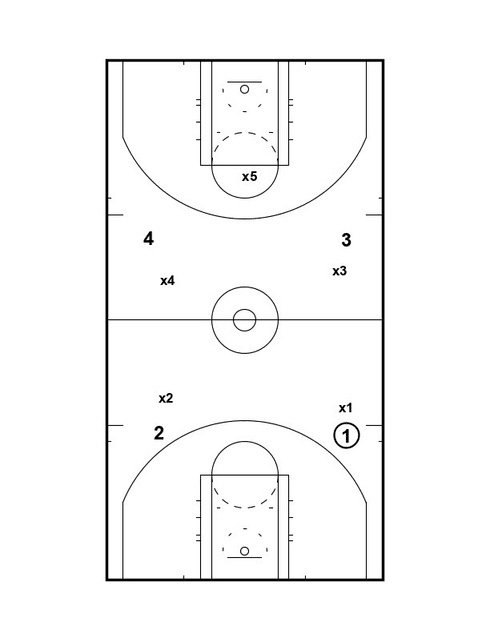
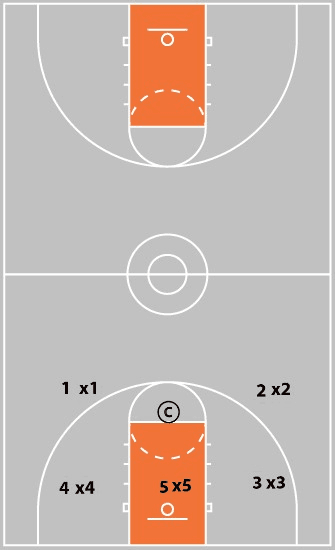
Many teams only scrimmage from a perfect start. Possessions begin with perfect spacing and the ball checked up top. That is not the game. Navy Transition simulates game randomness and trains players to recognize situations quickly. This is also a great drill to build IQ as well as competitiveness. Each team has 5 players on the floor. The coach has a ball to start. 1-5 are on one team; x1-x5 are on the other team Coach rolls out the ball to anywhere on the court Whichever team gets the ball is on offense going to the far side of the court (Diagram 1) Play goes from there Stress that players need to communicate as soon as the ball is put in play. In particular, the team that ends up on defense must be sprinting, pointing and talking as they get back on defense. The player who gains possession of the ball should immediately get their head up and scan. This allows them to see if there is an advantage somewhere on the floor. The player who gathers the ball should do so in a power position. This gives them strength and balance as they survey the floor. The other 4 offensive players must immediately get to their spacing spots. Consider giving the offense :05 to get to the correct spots on the floor once they gain possession. If they don’t, it’s a turnover. To add challenge to the drill, allow the team that gathers the ball to go either direction. This challenges them to scan both ends of the floor and decide where their best scoring opportunity is. If you do this, tell players that as soon as they start in a certain direction they cannot change. Made by Breakthrough Basketball
Team Play
No Paint Drill
Video by BreakthroughBBall
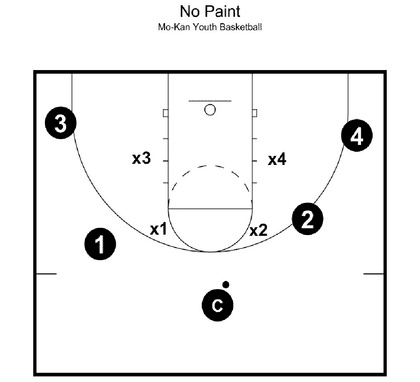
This is one of the best drills at eliminating penetration into the paint! It really develops a mentality of protecting the paint and not letting anybody get in there. Ifyou believe that penetrating via the pass or the dribble is one of the best offensive weapons, this drill is a must! It’salso a great all around defensive drill for practicing proper defensive habits. You have four offensive players. You have four defensive players matched up with the defensive players. Acoach or manager is positioned at the top. (Diagram 1) Coach starts the drill with a pass from the top. The object of the game is to keep the ball from penetrating the paint (lane). Offense gets a point for penetrating the paint on the dribble drive or pass. You can change possession on points scored (in the paint), turnovers, and defensive rebounds. It's just like a regular half court game, except the only way to a point is to get the ball in the lane. (Diagram 2) The first team to 3 wins. Playing to a low number (like 3) makes it really competitive and keeps the intensity at the level you want. 3-Point Shot Hits Rim – A progression would be to add that the offense can score another point by taking a three point shot that hits the rim. This forces defenders to maintain intense ball pressure. Excessive Fouling – You want our players playing hard on defense, but playing smart. Fouling and putting people on the free throw line is unacceptable. It’s not playing smart. The next progression in the drill is to begin awarding points if you are seeing excessive fouling and hand checking to stop the penetration. Make them stop the ball with their feet moving, not their hands reaching. Made by Breakthrough Basketball
Team Play
Around The Cones Transition
Video by BreakthroughBBall
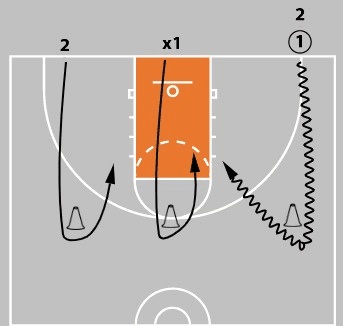
Being able to convert in transition is a must for good teams. This drill allows you to create various game-like situations to work on converting (and defending) in transition. Place 3 cones even with the top of the key. 1 cone is at the top of the key. The others are even with the wing spot. Have 3 even lines on the baseline. A player in an outside line starts with the ball. Play is live when 1 starts dribbling. All 3 players sprint around the cone in front of them (1 dribbles). (Diagram 1) After circling the cones, it’s live 2v1 against x1. Add a second defensive line (x2). The cone that the 2nd defensive player sprints around is positioned closer to ½ court. (Diagram 2) This variation involves a coach who passes to one of the offensive players after the circle the cone. (Diagram 3) This simulates attack after catching a pass in transition The dribbler must dribble with their inside hand. This makes the pass less likely to get deflected. The offense gets 1 shot and 1 pass. This simulates the fact that the transition opportunities evaporate quickly in 5v5 action. The defender should get back to the front of the rim. Their job is to not give up a layup. Encourage the defender to stunt at the dribbler to try and create in decision. The dribbler should attack until the defender gets between them and the rim. That’s their cue to pass. Made by Breakthrough Basketball
Team Play
Butler Disadvantage Drill
Video by BreakthroughBBall
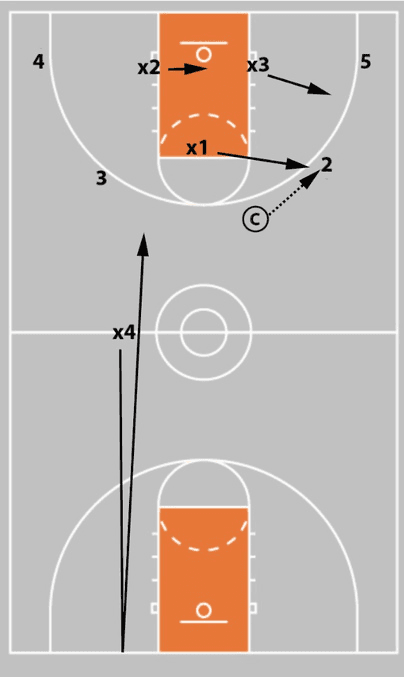
The offensive team has 4 players on the court. They are positioned on the wings and in the corners. The defensive team has 3 players who start in a triangle around the lane. The 4th defensive player is at half court. The coach starts with the ball. (Diagram 1) The coach passes to any of the offensive players. The 3 defenders in the key practice their shell defense rotations. The 4th defensive player sprints to the opposite baseline and then back into the play. The offense moves the ball but cannot move or shoot until the 4th defender recovers. Then it’s live. During the 4v3 shell, the defense must communicate. The ball side should be covered and 1 player should split 2 on the weak side. Players should not cover 2 passes in a row. Defensive communication must be loud, early and continuous throughout the drill. If the defense is rotating properly, the 4th defender should be filling in to the weak side when they come back into the play. The offense should use pass fakes to move the ball quickly during the shell portion of the drill. You can progress the drill by allowing the offense to shoot during the time they have the 4v3 advantage. Made by Breakthrough Basketball
Team Play
Offensive Cutthroat
Video by BreakthroughBBall
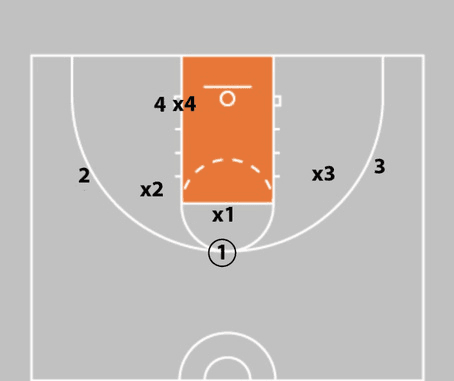
Can be played 3 on 3, 4 on 4, or 5 on 5. Three teams that rotate through. Coaches create rules that must be followed, ifarule isn’t followed coaches rotate that team out. Examples are: a. Nowasted dribbles- square up to the hoop first. b. Purposeful hard cuts and drives. c. Play off 2 feet in the lane. d. Don’t let the ball die in your hands. e. Thank the passer on a made basket. f. Must have a post touch. If the offense makes it, they stay. (Diagram 1) If the defense stops them, they go to offense and the next team comes on to play defense. Tailor the offensive rules to your team’s system. For example, if you pass & cut, make a failure to cut a turnover. Don’t include rules that don’t fit your style of play. Include a couple cultural ‘musts’ as well. These could be things like pointing to the passer or sprinting to help up a fallen teammate. Keep the drill moving fast. The 3rd team knows they are coming in on defense, they just don’t know who they’ll be guarding. Not breaking in between possessions forces the defense to come on with a sense or urgency and communicate. Try the same drill with defensive rules. Made by Breakthrough Basketball
Team Play
5v3 + 2 Fast Break Drill
Video by BreakthroughBBall
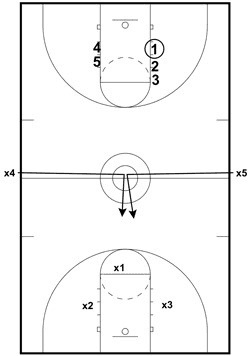
Drill begins with "Annie Over", Coach says "Go", we rebound, pitch out and we run our break. The two defenders at midcourt have to wait for the ball to cross half court, then sprint to the middle, touch hands and hustle down to join the defense. (Diagram 1) You can reset after every possession or run the drill continuously back and forth, with players running on and touching half court every time. Made by Breakthrough Basketball